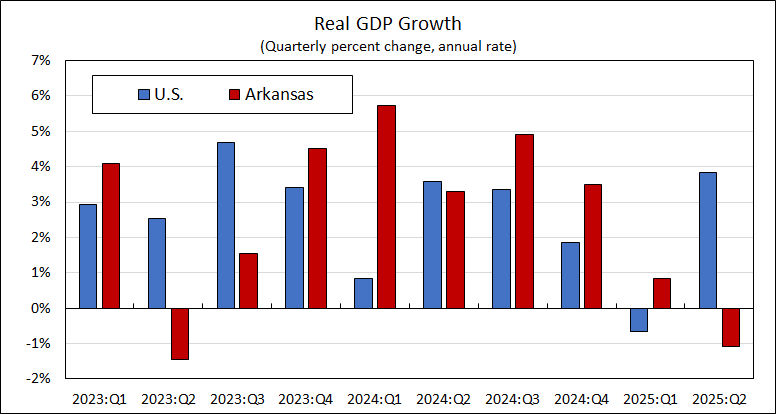
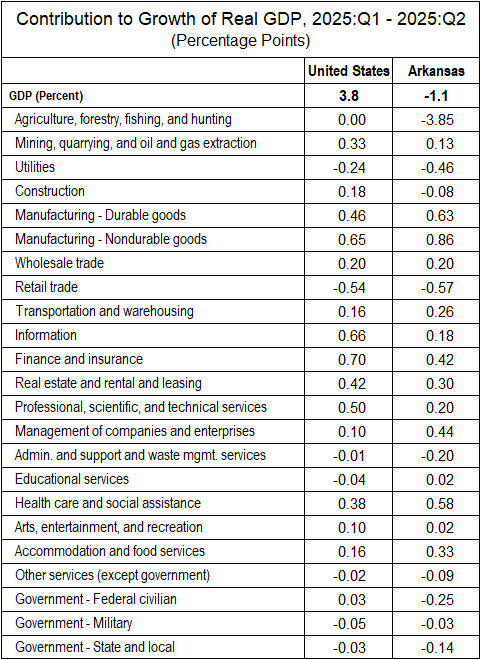
After a string of strong GDP reports since the second half of 2024, the latest report on Arkansas GDP was disappointing. In the second quarter of 2025, Arkansas GDP declined at an annualized rate of 1.1%. Arkansas was one of two states (along with Mississippi) that showed negative growth for the quarter. The U.S. GDP growth rate in the second quarter was 3.8%.
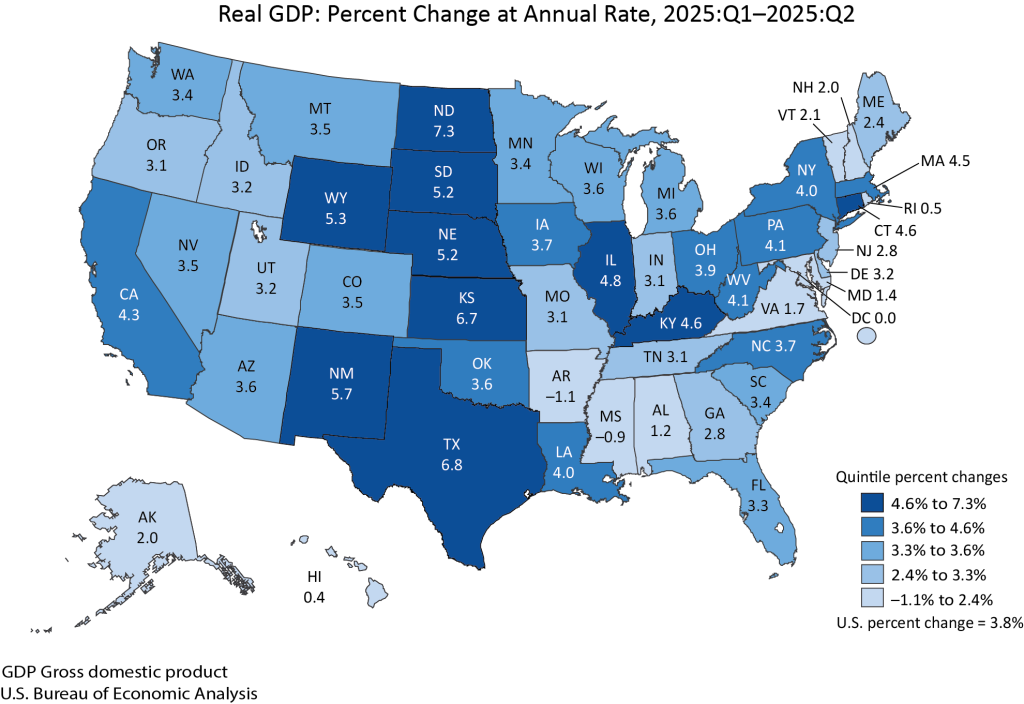
Not surprisingly, the second-quarter weakness was almost entirely attributable to the volatile agricultural sector. In fact, varying conditions in farm output were responsible for both extremes of state GDP growth across the nation. According to the news release from the Bureau of Economic Analysis, the agriculture sector “was the leading contributor to growth in six states including Kansas, the state with the third-largest increase in real GDP. In contrast, this industry was the leading offset to growth in six states including Arkansas and Mississippi, the two states where real GDP declined.”
The table of contributions to GDP growth by sector, below, illustrates the dramatic impact of the agricultural sector decline in the second quarter. Were it not for agriculture, Arkansas GDP would have risen by over 2.7%.
Annual Revisions
Today’s report also included annual updates and revisions to GDP and Personal Income data. As shown in the figure below, data for Arkansas were subject to notable revisions in both directions in the quarterly data. Notably, the quarterly growth rates for the third and fourth quarters of 2024 were revised down. In the original data releases, Arkansas was the fastest growth state in both quarters. After revision, the lower growth estimates knocked the state’s ranking down, although it remained on the top ten list in both quarters.
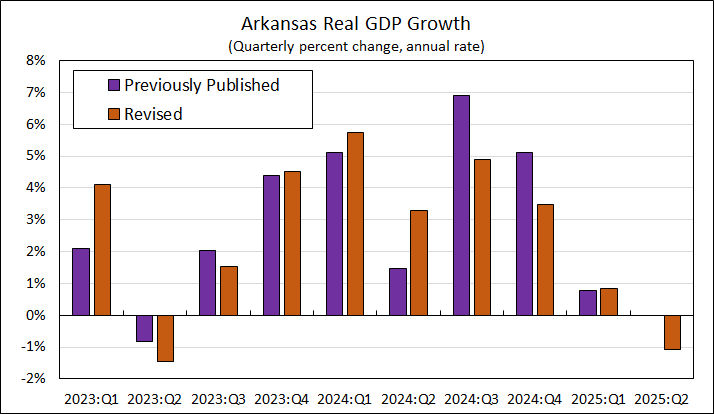
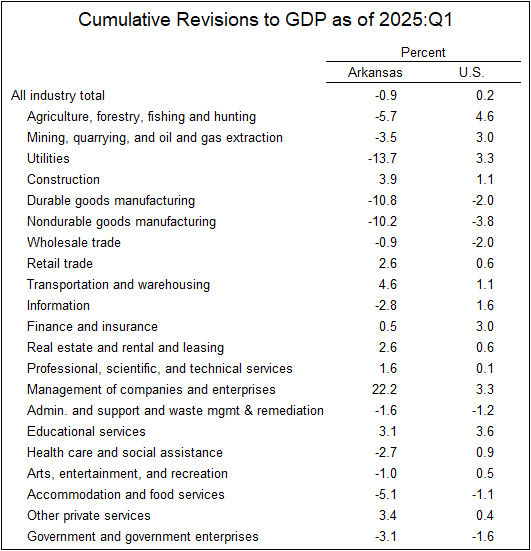
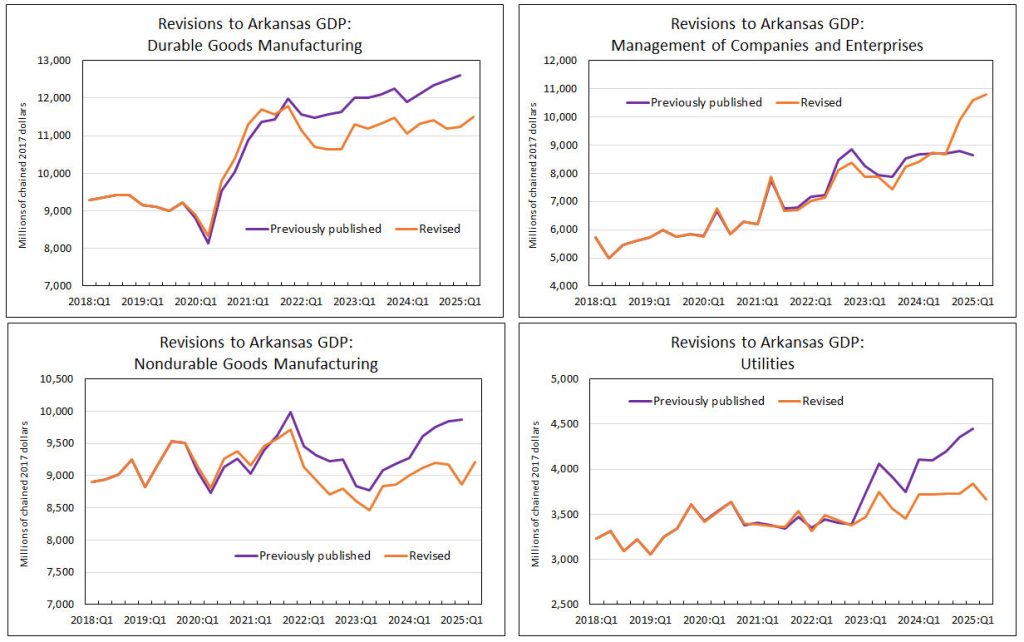
The magnitude of revisions was, for some sectors, substantial. Overall, the cumulative revisions marked down Arkansas’ first quarter GDP by 0.9%. Utilities and manufacturing were particularly hard hit. On the other hand, Management of companies and enterprises was revised significantly higher.